
Several trees, not one
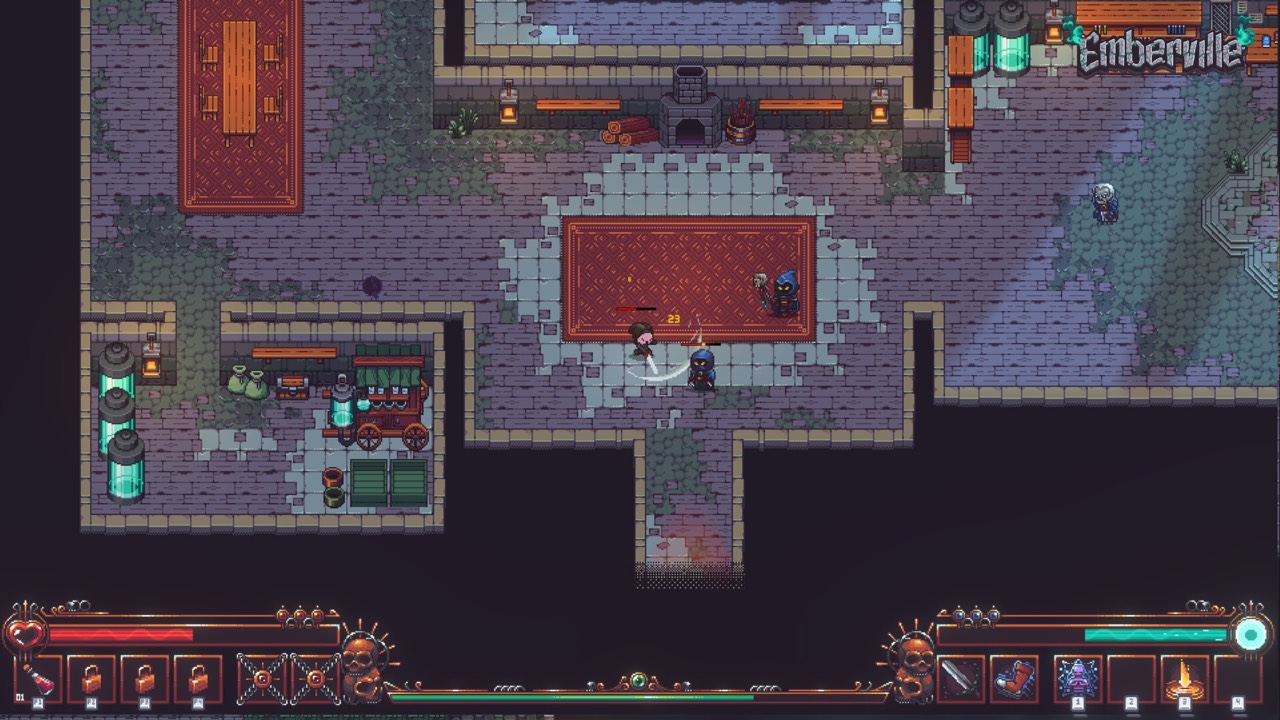
The developer’s October demo announcement lists combat categories, classes, gathering and crafting as parts of progression. Independent previews also describe class progression and equipment progression as separate. COGconnected adds that crafting has its own leveling and skill trees. Together, that points to several parallel systems.
Calling all of this a single tech tree hides important differences. Each system grows from different activities and opens different things. Advice about one rarely transfers directly to another. Sorting them out first makes every other guide easier to follow.
Class skill trees
Classes in Emberville develop individually, each with their own skills. WayTooManyGames showed a Wanderer screen with a tier reaching level 40. That is a glimpse of one class tree in a preview build. It is not proof of a level cap for every class.
Skills learned in a class can also support other classes through inheritance. The Steam store names both active and passive skills. So class trees are not isolated islands. Our skill inheritance page covers how that link works.
Weapon and armor mastery
Two previews describe a bow improving simply through use. The developer says progression in weapon and armor categories can unlock classes. That makes equipment mastery its own layer, driven by what you actually fight with. It also connects back to the class system.
This layer is often what people mean when they ask how to get stronger. It rewards sticking with equipment you enjoy. Exact mastery thresholds are not confirmed, so this page does not list them. Check the relevant screen in your build for real numbers.
Crafting development
COGconnected describes crafting progression with its own leveling and skill trees. The February development announcement adds that items can develop through skills, blueprints and recipes. This is the layer most like a traditional tech tree. It decides what you can make, rather than how you fight.
Because it is a separate track, combat progress does not automatically advance crafting. Time spent crafting is what moves it forward. Our crafting guide explains how to plan materials around recipes. Keep crafting questions there rather than mixing them with class advice.
How the layers connect
The systems are separate but not unrelated. Weapon and armor progress can unlock classes, and class skills can be inherited across classes. Gathering supplies crafting, and crafting supplies the equipment you then master. Exploration and rescues feed several of these at once, according to the developer.
A simple mental map helps. Fighting builds mastery and class skills. Gathering and crafting build items and crafting levels. Rescues and exploration open new opportunities across both.
- Combat → weapon and armor mastery → new classes
- Classes → skills → inheritance into other classes
- Gathering → crafting levels, blueprints and recipes → equipment
- Exploration and rescues → new opportunities across systems
Do not mistake a preview tree for a launch cap
Preview screenshots are tempting to treat as final. A level-40 tier on one class screen does not establish a global cap. Creator builds were played before the public demo and before Early Access. Values can change at each step.
Early Access is planned for October 27, 2026 and is described as an evolving release. Progression systems are likely to be tuned during it. Any tree layout or cap you read now may shift. Note the version when you rely on one.
Why we do not publish an optimal order
Many players want a best order for unlocks. With several separate systems and no verified node maps, such an order would be guesswork. It would also depend heavily on your class and playstyle. We would rather not present a guess as a plan.
What does hold is the general approach. Use equipment you like so mastery grows naturally. Read class menus before spending. Plan crafting around real recipes from your build.
Where exploration fits in
Exploration is not a tree, but it drives several of them. The developer says exploration and NPC rescues feed multiple progression systems. The Steam page frames the game around rescuing survivors in the Vitromotus. Progress below ground connects to progress in the town above.
That means some unlocks may come from where you go and who you find, not only from spending points. When a menu shows a locked option, its requirement may point you somewhere to explore. Reading those requirements is part of navigating the trees. Our class unlocks page explains how to track them.
A practical way to use the trees
Pick one focus for each session rather than trying to advance every tree at once. A combat session builds mastery and class skills. A gathering and crafting session builds crafting levels and equipment. Alternating keeps all systems moving without spreading resources too thin.
Keep short notes on what each unlock needed and what it gave. Include your game version with the note. Over time, those notes become your own reliable tree map. They will also help you spot changes after patches.
Trees in the demo versus Early Access
The public demo covers the prologue, which takes about 90 minutes on average according to the developer. You will likely see only the start of each progression layer there. Previews from an earlier creator build showed more of a class screen. Early Access will open the systems further.
Expect the trees to look fuller once you are past the opening. Expect them to change during Early Access too, as the developer tunes the game. The demo was already patched on October 22. Check your menus again after updates.
What remains unverified
A full node map for class trees, mastery tracks or crafting has not been cross-verified. Level caps, exact prerequisites and costs are also unconfirmed. The IGN preview description mentions progression and crafting potential, but no transcript was verified. We left those details out on purpose.
Once systems can be checked on a stable build, this page will add maps with version labels. If you record a tree carefully, screenshots help us verify it. You can send them through our contact page. Please include your build number.
Sources and further reading
- Public demo announcement — Cygnus Cross / Evolve PR
- Preview: Emberville — WayTooManyGames
- Emberville Preview — COGconnected
- Emberville — Steam store
- Emberville Hands-On Preview — CGMagazine
- February development announcement — Cygnus Cross / Evolve PR
- Demo Patch Notes, October 22 — Cygnus Cross
- What to Expect from Emberville Early Access on October 27th — Cygnus Cross